What this means for the plant owner
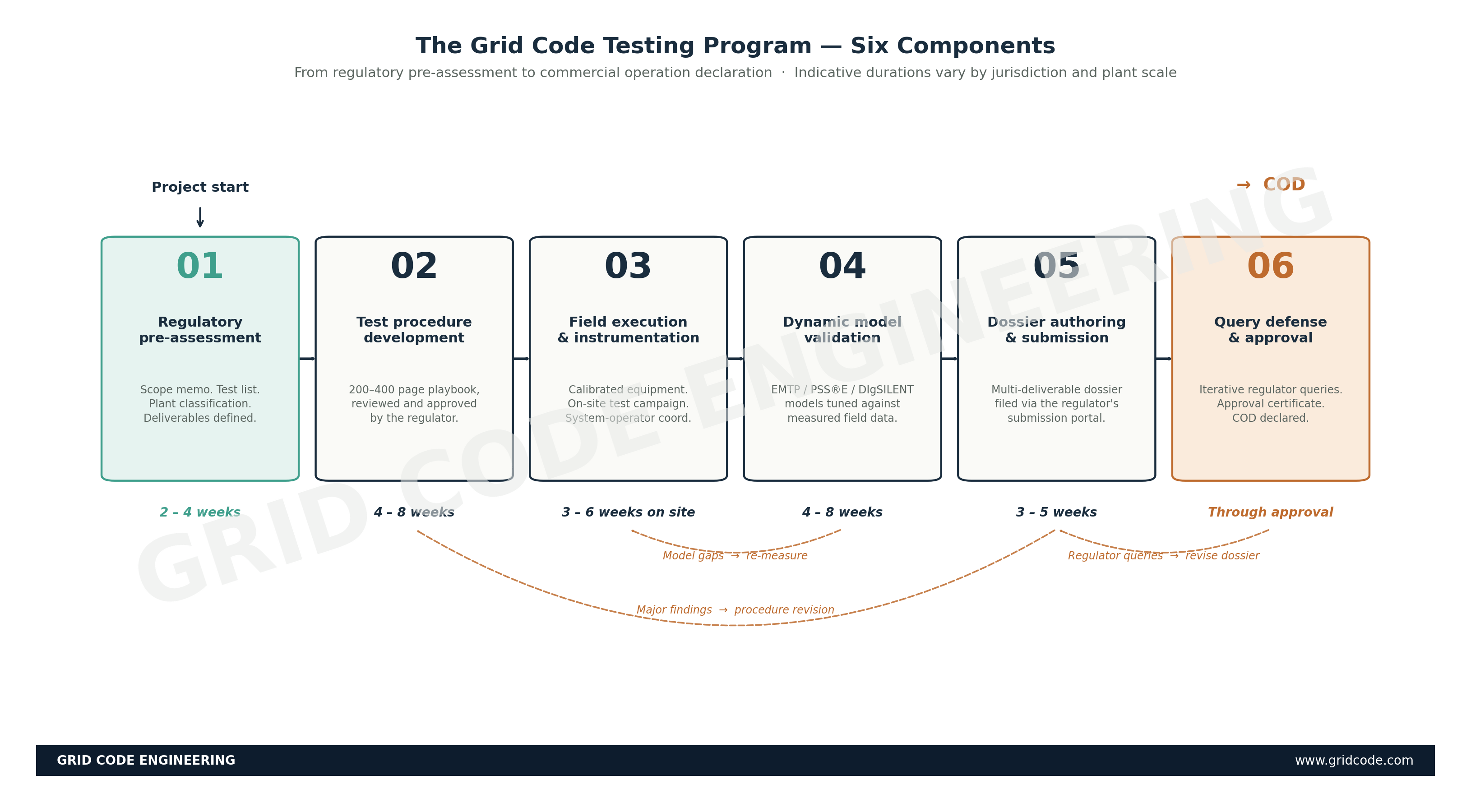
The program is not optional, and it is not last. It cannot be deferred to the end of commissioning. Pre-assessment work should be active by the end of FEED, with full procedure development active during EPC.
The program crosses every plant boundary. The testing team coordinates with the OEM, the EPC, the operations team, the system operator, and the regulator. Owners who treat the program as a single contractor's responsibility underestimate the coordination load.
The dossier is a long-lived asset. Once approved, it becomes the canonical reference for the plant's grid behavior for its operating life. Lenders read it. Insurance underwriters read it. Future M&A transactions reference it.
The cost of the program is small compared to what it protects. The grid code testing program is a fraction of total commissioning cost, which is itself a fraction of total capital cost. The thing it protects — the right to dispatch energy at the merit-order rate — is the plant's revenue stream.
The applicable regulatory framework in your jurisdiction (in Mexico, CRE Resolution RES/550/2021 establishes the Código de Red 2.0), the current depth and structure of typical major-plant dossiers, and the specific deliverable list for each stage of the commissioning process should be verified against the active regulatory documents. The structural six-component framework (pre-assessment through approval) is standard across regulated markets; jurisdiction-specific parameters and the Mexican figures cited here should be confirmed.